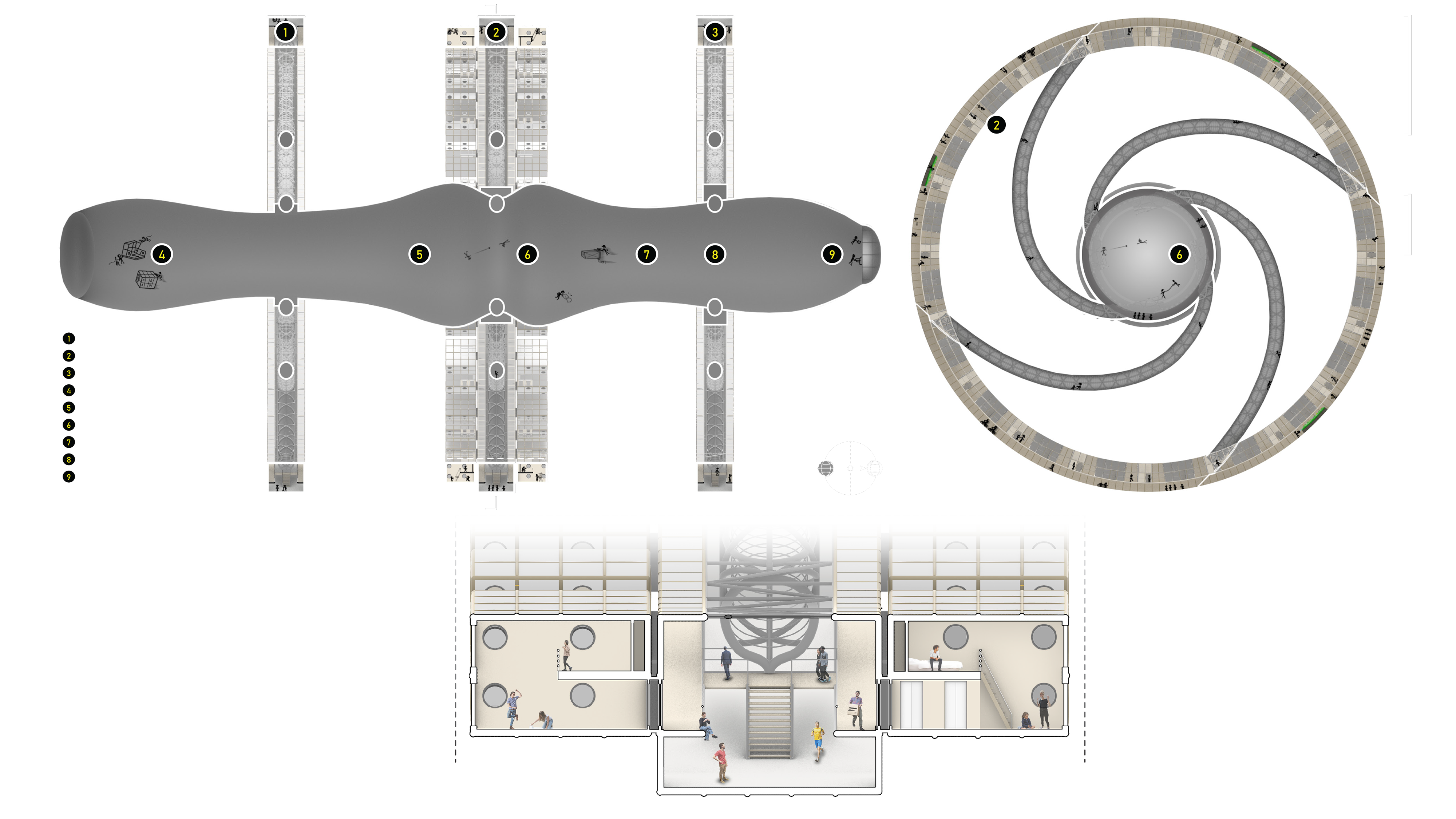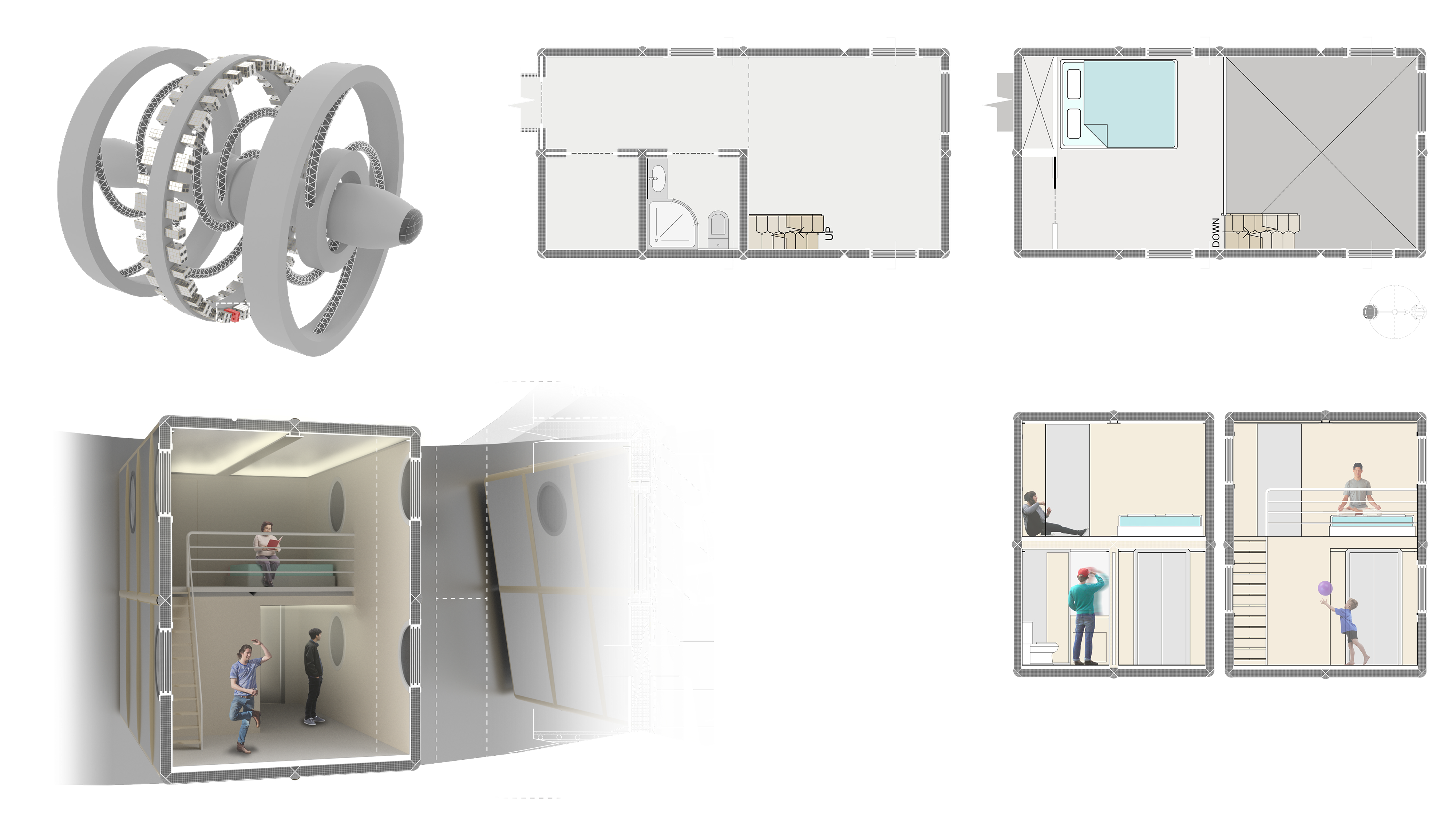

The year is 2080. Humans have been able to regulate their impact on the planet through the joint efforts of developed nations, and climate change has been virtually eradicated. World peace has been achieved, and efforts to make long-term space habitation have been developed to the point where it is realistic and does not perform adverse damage upon the human body. There are a growing number of individuals living on Earth who wish to see it left behind and preserved, similar to how national parks create protections for large stretches of land. This group of people believe that Earth is too beautiful, so we must preserve and move a portion of the human population to another planet. With them, they would bring a population of human beings and a broad representation of human culture until the point at which they embark on their journey to this new planet.

They also realize that they cannot alone influence every human being on the planet to leave it, nor is that feasible. Instead, this journey will set a precedent moving forward for multi-generational trips to other intergalactic destinations. These nations include the same ones that initially established the International Space Station (that being the United States, Japan, Canada, Russia, and Europe). Collectively, they all had contributed heavily in the early- and mid-21st-century towards researching long-term space habitation, which gave them an upper-hand in making their way towards a prospective Earth-like planet. The planet chosen is Proxima Centauri b, the closest habitable planet observed orbiting the star Proxima Centauri.
Thanks to the incredible factor of human resilience and innovation, the select group of nations have been able to innovate far enough where long-term space habitation is possible. The adverse effects of radiation, weightlessness, and navigation have been addressed through the well-established Intergalactic Building Code (IBC, which is not to be confused with the International Building Code). Various levels of payload transportation into space has been achieved, from building a low-friction magnetic-levitation launching track on the mountains of the Himalayas, to the creation of a space elevator. Rather than use chemical propulsion technologies to escape the Earth’s atmosphere, a module containing cargo and people climbs a long tether. Energy is beamed to the module from both the Earth’s surface and the geostationary counterweight as it rises, removing the need for there to be any energy generation on-board. The elevator is what truly revolutionized and economized moving mass and people into space. Through this economization, a plethora of private companies and investors saw an opportunity to make money with what the new environment presented, and thus the commercialization of space began. It started out with a few small modularized hotels, where inquiring guests could spend a few days in low-earth-orbit for a reasonable price. Soon after, the modules began to become larger, more complex, and luxurious. Habitable satellites flying along Earth’s atmosphere soon dotted the night sky and became a regular trip made by those with the necessary funds and access. The space-side counterweight at the end of the elevator flourished into an international hub of activity and is the only geostationary location in space physically tethered to the Earth.
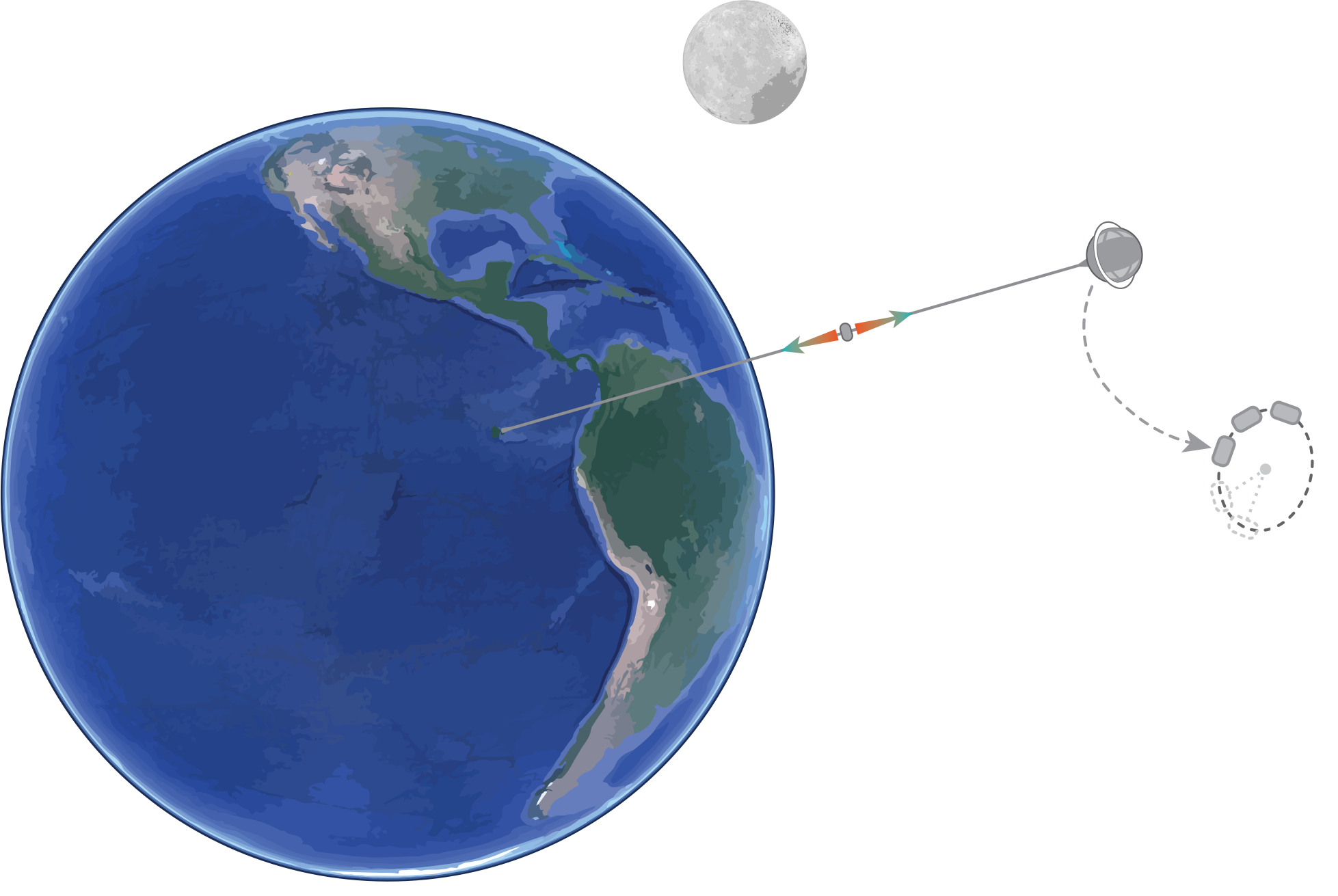
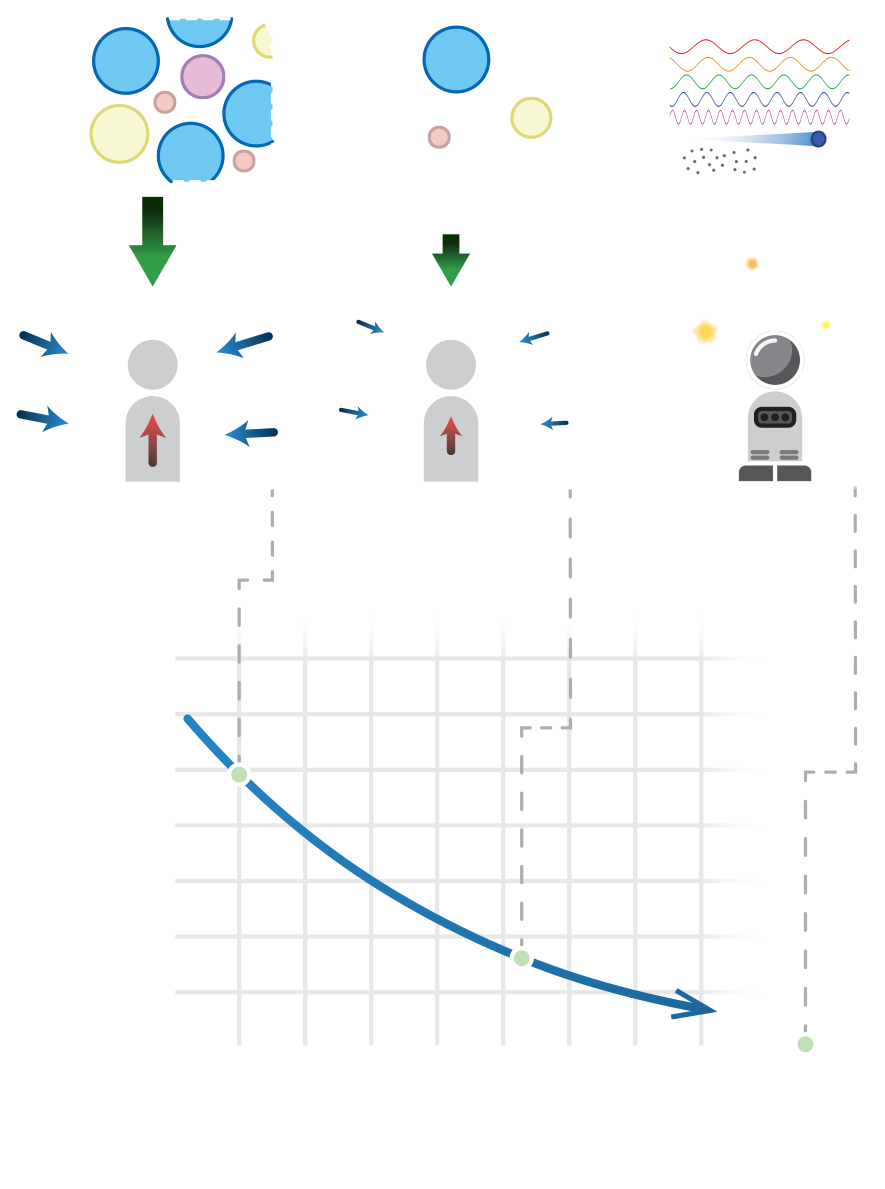
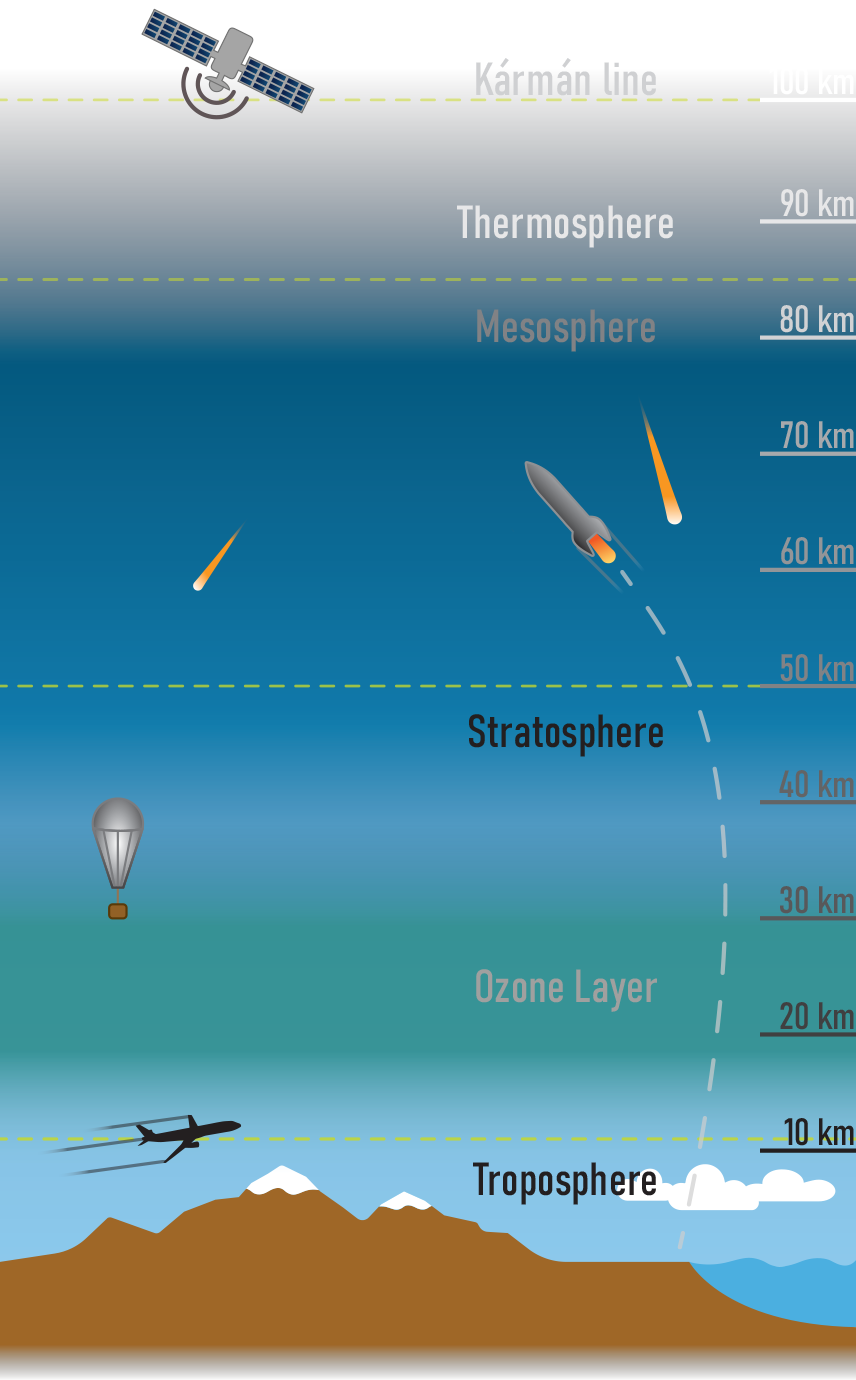
It is from here that a ship large enough to house generations of people can be constructed. The length of the trip to Proxima Centauri b (PCb) requires generations of people since experiments with hibernation have so far proved ineffective. The technology has advanced far enough so that a ship of this size and caliber is able to accelerate to 2.11% the speed of light, and the distance of 4.22 lightyears can be covered in 200 years. Utilizing adaptive social engineering principles, a sustainable population of people can be brought to other planets. Although, the architecture of the space should go beyond simply sustaining a healthy population. In theory (and according to a computer simulation based solely on numbers), bringing a physically healthy population to other planets is feasible given the context of developed technologies in the future. The selected crew is a mixture of the previously mentioned nations, amounting to 100 people with the prospect of growing to 200 people at the time of arrival to Proxima Centauri b.
The crewmembers of the trip have come to terms with the fact that they will never see the planet's surface themselves. What they understand to be important is that this will be the most significant migration of people across space and time throughout the history of modern civilization. A majority of the people born on the ship during the trip will only serve the purpose of sustaining future generations. They will need to seek meaning in their own lives upon the ship beyond coming to the specified age of reproduction, and the architecture of the space that they inhabit for the entirety of their lives will need to help them find that.
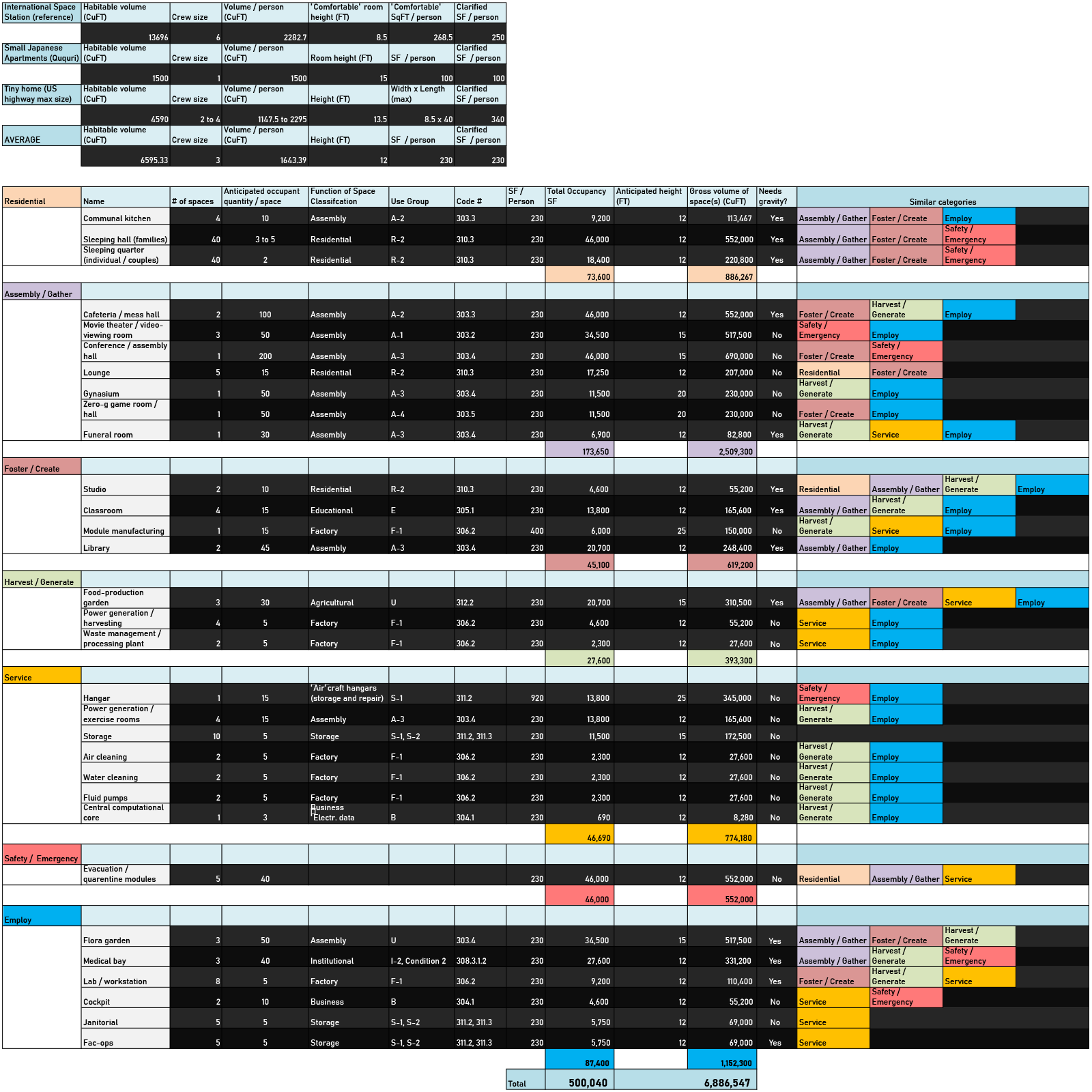
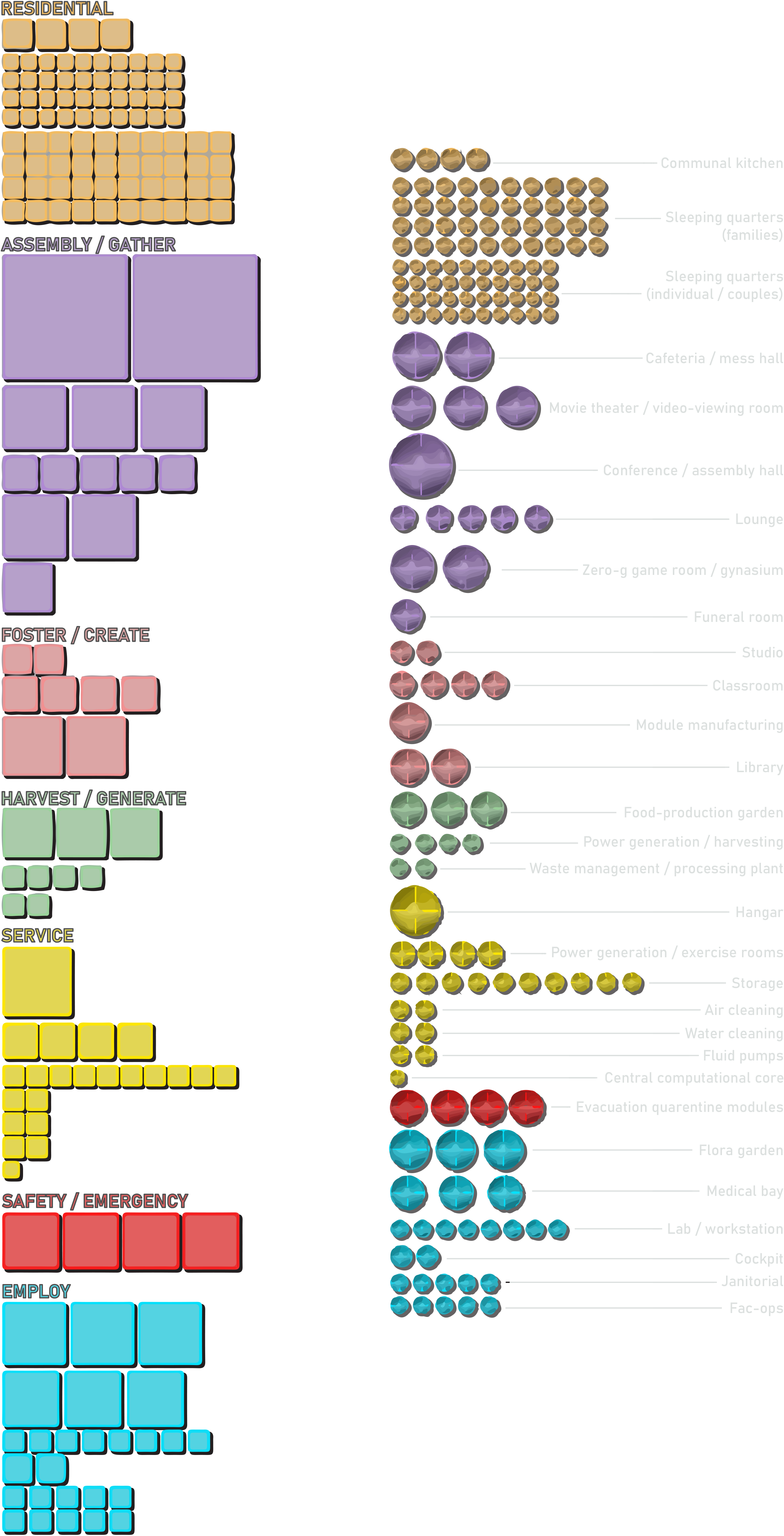
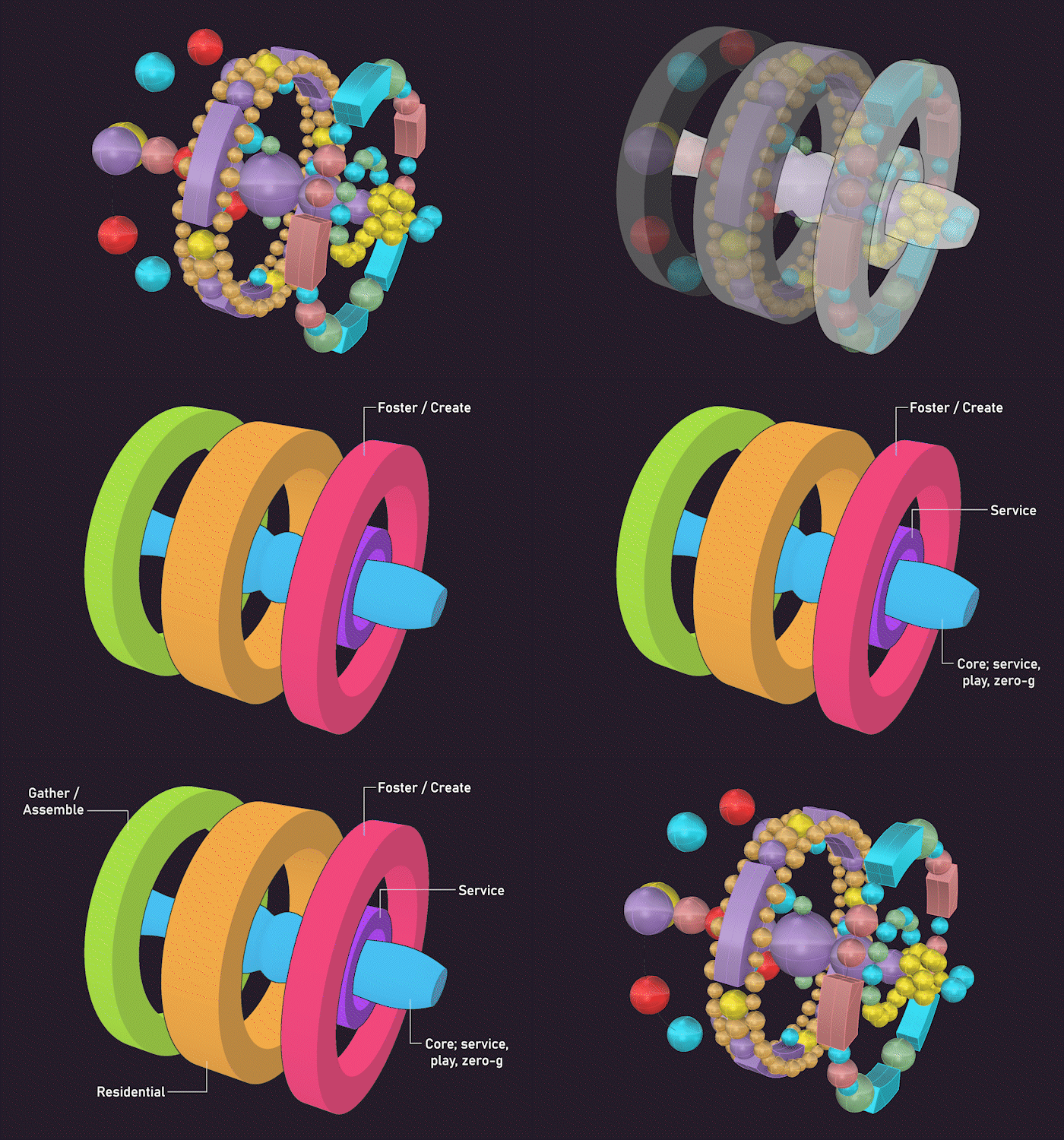
Every great design journey begins somewhere. Using the momentum and analysis I had done during the first semester of Thesis, I created a programming matrix (below), derived the form of the spaceship, and moved along from there.
And without further ado...